Industry Background: The Growing Demand for Full Visibility
Modern driving conditions are becoming increasingly complex. Urban congestion, tighter parking spaces, and the rapid growth of both passenger and commercial vehicles have significantly increased the challenges drivers face on a daily basis. Traditional visibility tools—such as rearview mirrors and basic reversing cameras—are no longer sufficient to provide the level of awareness required for safe driving.
One of the most persistent issues is the presence of blind spots. Whether in compact passenger cars or large commercial trucks, areas around the vehicle remain difficult to monitor in real time. These limitations often lead to low-speed collisions, parking incidents, and even serious accidents involving pedestrians or cyclists.
At the same time, safety expectations are rising. Consumers are demanding smarter vehicles, while governments and regulatory bodies are gradually introducing stricter safety standards. In this context, 360° camera systems, also known as surround view systems, have emerged as a critical solution—bridging the gap between limited human vision and the need for complete environmental awareness.
Understanding 360° Camera Systems: How They Work
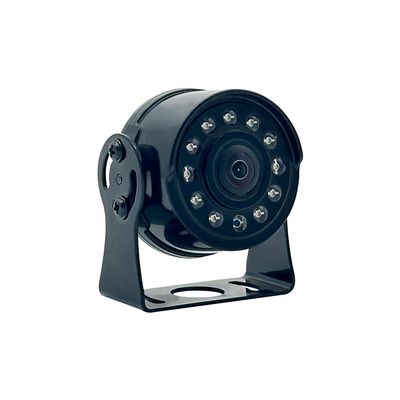
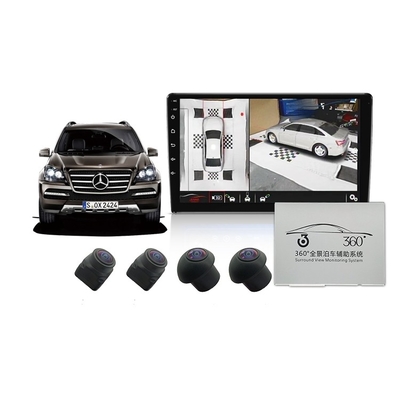
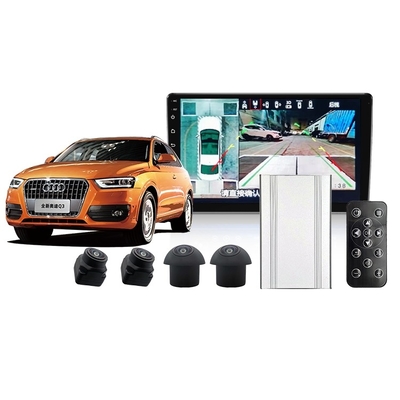
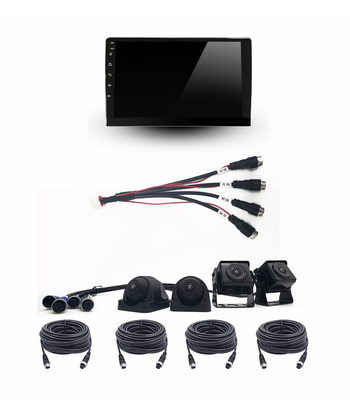
A 360° surround view system is designed to provide drivers with a complete, real-time view of the area surrounding the vehicle. Unlike single-camera solutions, it relies on multiple cameras strategically positioned around the vehicle.
Core Components:
- Front camera mounted near the grille
- Rear camera integrated into the tail section
- Side cameras installed under side mirrors
These cameras capture images simultaneously, which are then processed by a central control unit.
Image Processing and Stitching:
Using advanced image stitching algorithms, the system combines multiple video feeds into a single, seamless bird’s-eye view. This top-down perspective allows drivers to see obstacles, road markings, and surrounding objects with a level of clarity that was previously impossible.
Real-Time Display:
The processed image is displayed on an in-car monitor, often with dynamic guidelines that adjust according to steering input. This enables precise maneuvering, especially in tight or complex environments.
Key Advantages: Eliminating Blind Spots and Enhancing Awareness
1. Complete Surround Visibility
The most significant advantage of 360° systems is their ability to eliminate blind spots. Drivers gain a full view of the vehicle’s perimeter, making it easier to detect:
- Pedestrians and cyclists
- Low-lying obstacles
- Nearby vehicles in tight spaces
This is particularly important in urban environments where unexpected hazards are common.
2. Improved Parking Safety and Efficiency
Parking is one of the most common situations where accidents occur. With a 360° system:
- Drivers can accurately judge distances
- Align the vehicle precisely within parking lines
- Avoid collisions with surrounding objects
Dynamic parking guidelines further assist by showing the projected path of the vehicle, reducing reliance on guesswork.
3. Enhanced Safety for Commercial Vehicles
For trucks, buses, and vans, blind spots are significantly larger than in passenger cars. 360° camera systems provide:
- Full perimeter monitoring
- Safer turning and lane changes
- Reduced risk of accidents involving pedestrians or smaller vehicles
In logistics and transportation, this translates directly into improved safety performance and reduced operational risk.
4. Better Performance in Complex Environments
In challenging environments such as construction sites, warehouses, and agricultural fields, visibility is often limited. 360° systems help operators:
- Navigate uneven terrain
- Avoid obstacles during operation
- Improve precision in confined workspaces
This not only enhances safety but also increases operational efficiency.
Technological Advancements Driving Adoption
The rapid growth of 360° camera systems is closely linked to continuous technological improvements.
High-Definition Imaging
Modern systems support AHD and 1080P resolution, delivering sharper and more detailed images. This allows drivers to identify smaller objects and react more quickly.
Wide-Angle Lens Technology
Cameras with ultra-wide viewing angles (up to 170°) ensure maximum coverage, minimizing blind areas and improving stitching accuracy.
Low-Light and Night Vision Capability
Advanced sensors and image processing technologies enable clear visibility even in low-light conditions, making nighttime driving safer.
Durability and Reliability
With IP67/IP68 waterproof ratings, these systems are designed to withstand harsh weather conditions, ensuring consistent performance across different environments.
Reduced Latency
Improved processing speeds allow near real-time image display, which is critical for responsive driving decisions.
Commercial Fleets
Fleet operators are adopting 360° systems to:
- Reduce accident rates
- Lower insurance costs
- Improve driver training and accountability
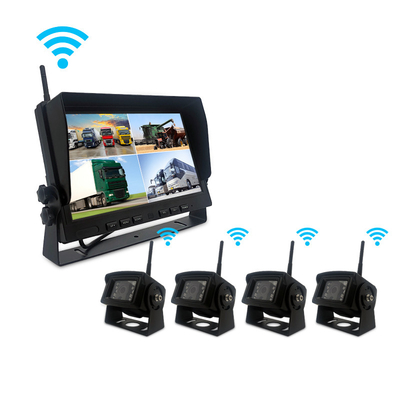
Multi-channel systems (4CH, 6CH, 8CH) are becoming standard in fleet safety solutions.
Why 360° Camera Systems Are Becoming Essential
The growing importance of 360° systems is driven by multiple factors:
- Safety: Significant reduction in blind spot-related accidents
- Efficiency: Faster and more accurate maneuvering
- Cost Savings: Lower repair and insurance costs
- User Experience: Increased driver confidence and convenience
- Regulatory Pressure: Movement toward mandatory safety technologies
Together, these factors are transforming 360° camera systems from optional upgrades into essential safety components.
Conclusion: A New Standard for Vehicle Safety
The evolution of vehicle safety is moving toward full visibility, intelligent awareness, and system integration. 360° camera systems are at the center of this transformation.
By combining advanced imaging, real-time processing, and integration with AI and connectivity technologies, these systems are redefining what it means to drive safely.


 Το μήνυμά σας πρέπει να αποτελείται από 20-3.000 χαρακτήρες!